
High performance shouldn’t cost you your people. But are managers equipped to support employee wellbeing?
An old boss of mine once said something to me that has stayed with me ever since.
“You’re not your normal effervescent self.”
It was a simple observation, but it opened up a really useful conversation about the stress I was experiencing at the time. There was no judgement, no assumption about what might be wrong and no pressure to explain myself. Just someone noticing that something had changed and creating an opportunity to talk about it.
Looking back, I think it was a great example of how managers can approach conversations about wellbeing.
But in all the years since, I’ve noticed something that concerns me. Managers often don’t feel confident or equipped to have those conversations. And when those conversations don’t happen, people can continue struggling in silence.
We expect managers to support wellbeing. But have we given them the confidence to do it?
Managers are expected to deliver results, meet targets, motivate their teams and create environments where people can perform at their best. Alongside all of this, they’re increasingly expected to recognise when someone may be struggling with their mental health or wellbeing.
But how many have been given the practical tools and confidence to do that?
A manager might notice that someone has become quieter in meetings, seems less engaged or is working longer hours than usual. Their performance might have dipped, or perhaps they’re simply not behaving like their usual self.
Recognising a change is one thing. Knowing what to do about it is another.
Is it just a difficult week, or something more significant? Is it appropriate to ask? What if they say they’re not okay? What if I say the wrong thing?
These are understandable concerns, and they can prevent managers from initiating conversations that might make a real difference.
The reality is that managers don’t need to have all the answers, and they certainly shouldn’t be expected to diagnose someone’s mental or physical health. But they do need to feel confident recognising potential warning signs, starting supportive conversations and knowing when to signpost someone towards further help.
The cost of conversations that don’t happen
When people don’t feel able to discuss what they’re experiencing, stress can build. And the consequences aren’t always immediately obvious. Sometimes it shows up as increased absence or declining performance. Sometimes it’s someone who was previously engaged becoming withdrawn, less productive or quietly disengaged. In other cases, someone may continue delivering at a high level while becoming increasingly exhausted behind the scenes.
This is particularly important when we think about high-performing employees. Often, the very people who are most committed to their work are reluctant to admit they’re struggling. They don’t want to let their colleagues down, miss a deadline or appear unable to cope. So they keep going. Until, eventually, something has to give.
Wellbeing support often arrives after the moment it was needed and that’s a problem for employees, managers and organisations alike.
Moving from reactive to proactive wellbeing support
Many organisations already have wellbeing policies, employee assistance programmes, mental health resources and support services in place. These are valuable, but having support available doesn’t necessarily mean people know when they need it, how to access it or feel comfortable asking for help.
The opportunity is to make wellbeing support more proactive.
What if we could help managers recognise the signals earlier? What if they knew the right questions to ask, how to create a supportive conversation and what practical steps they could take next?
And what if employees had a simple, private way to reflect on their own wellbeing before things became unmanageable?
This is where I believe we can make a meaningful difference.
Introducing the Cadence Toolkit
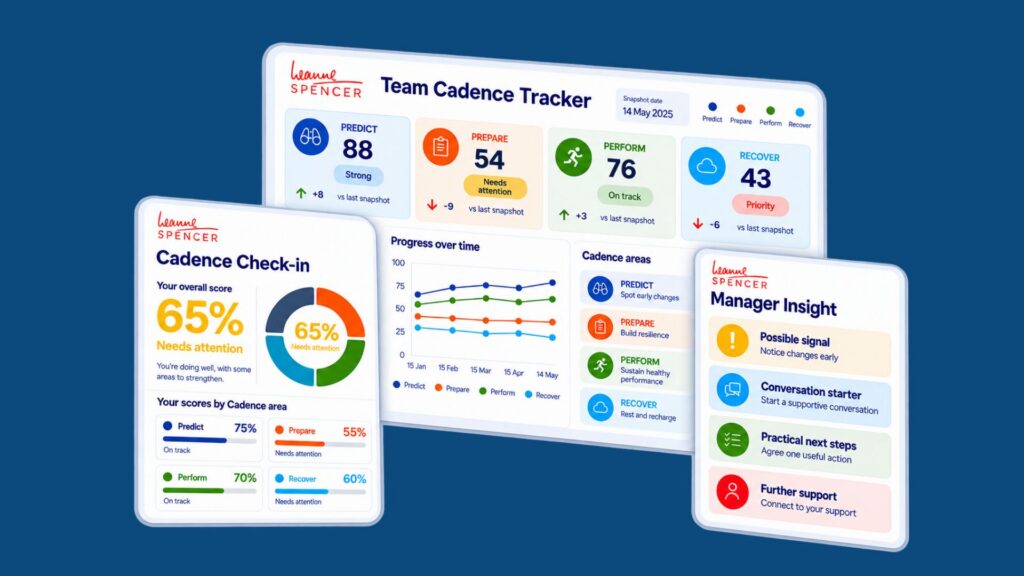
That’s why we’re developing the Cadence Toolkit, a practical digital experience designed to help organisations turn wellbeing awareness into action.
It’s built around my Cadence Approach®, which helps people manage their energy through four connected stages: Predict, Prepare, Perform and Recover.
The Toolkit is being developed to give employees and managers practical guidance they can use in everyday working life, helping them recognise what’s happening, understand what may be contributing to it and, most importantly, know what to do next.
For managers, this means support with identifying observable signs of stress or changes in behaviour, along with specific questions, conversation prompts and practical guidance to help them respond with confidence.
It also means knowing when to seek additional support and being able to signpost employees towards relevant resources, including both the organisation’s own internal support and resources from our Cadence library.
The aim isn’t to turn managers into wellbeing experts or clinicians. It’s to give them the confidence, language and practical tools to have conversations that might otherwise never happen. Importantly, it’s not just about recognising when someone is struggling. It’s also about understanding what’s working well, helping people protect their energy and creating the conditions for sustainable high performance.
High performance shouldn’t come at the expense of wellbeing
I’ve spent more than 15 years helping organisations understand how to sustain high performance, and one thing has become increasingly clear: we need to get better at managing energy, recognising pressure and creating opportunities for recovery before burnout takes hold.
The Cadence Toolkit is a natural extension of that work.
It’s about giving people a shared language, practical tools and the confidence to take appropriate action earlier. Because sometimes, a simple observation like “You’re not your normal effervescent self” is all it takes to start an important conversation.
But we need to make sure managers feel equipped to have it.
Be among the first to introduce the Cadence Toolkit
We’re inviting a small number of organisations to register their interest in becoming founding organisations ahead of the first rollout.
If you’re responsible for HR, Learning & Development, organisational culture or workplace wellbeing, or you are a people lead, this is an opportunity to explore how the Cadence Toolkit could complement the support you already have in place.
By registering your interest, you can connect directly with me to discuss your organisation’s needs, explore the proposed Toolkit and find out more about priority rollout opportunities and founding-partner terms.
There’s no financial commitment to register, just an opportunity to start a conversation about making wellbeing support more proactive, practical and sustainable.